
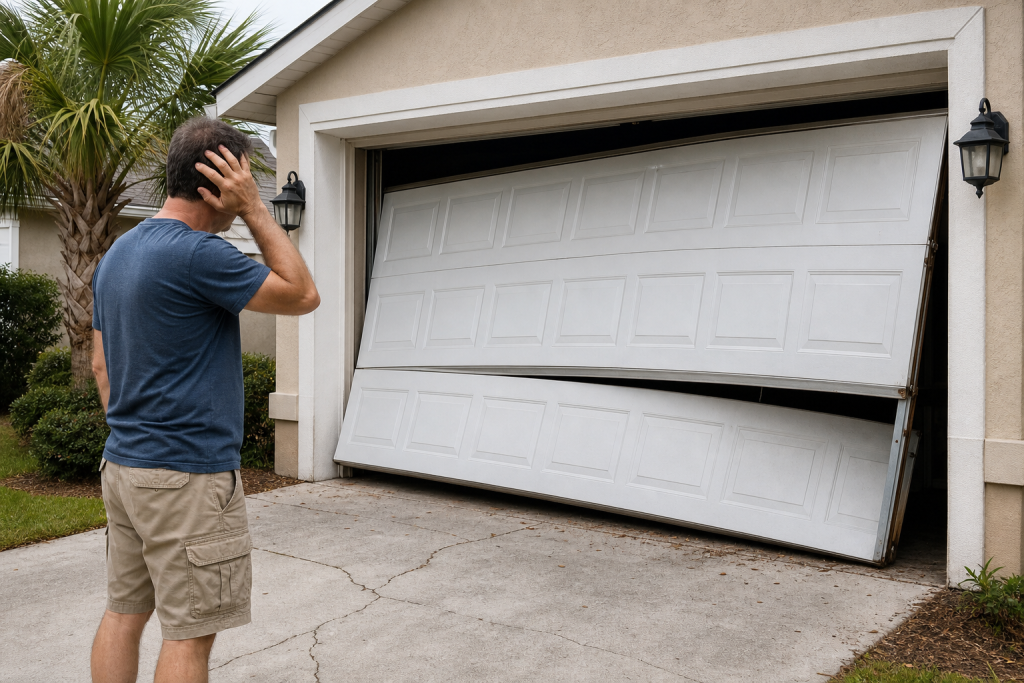
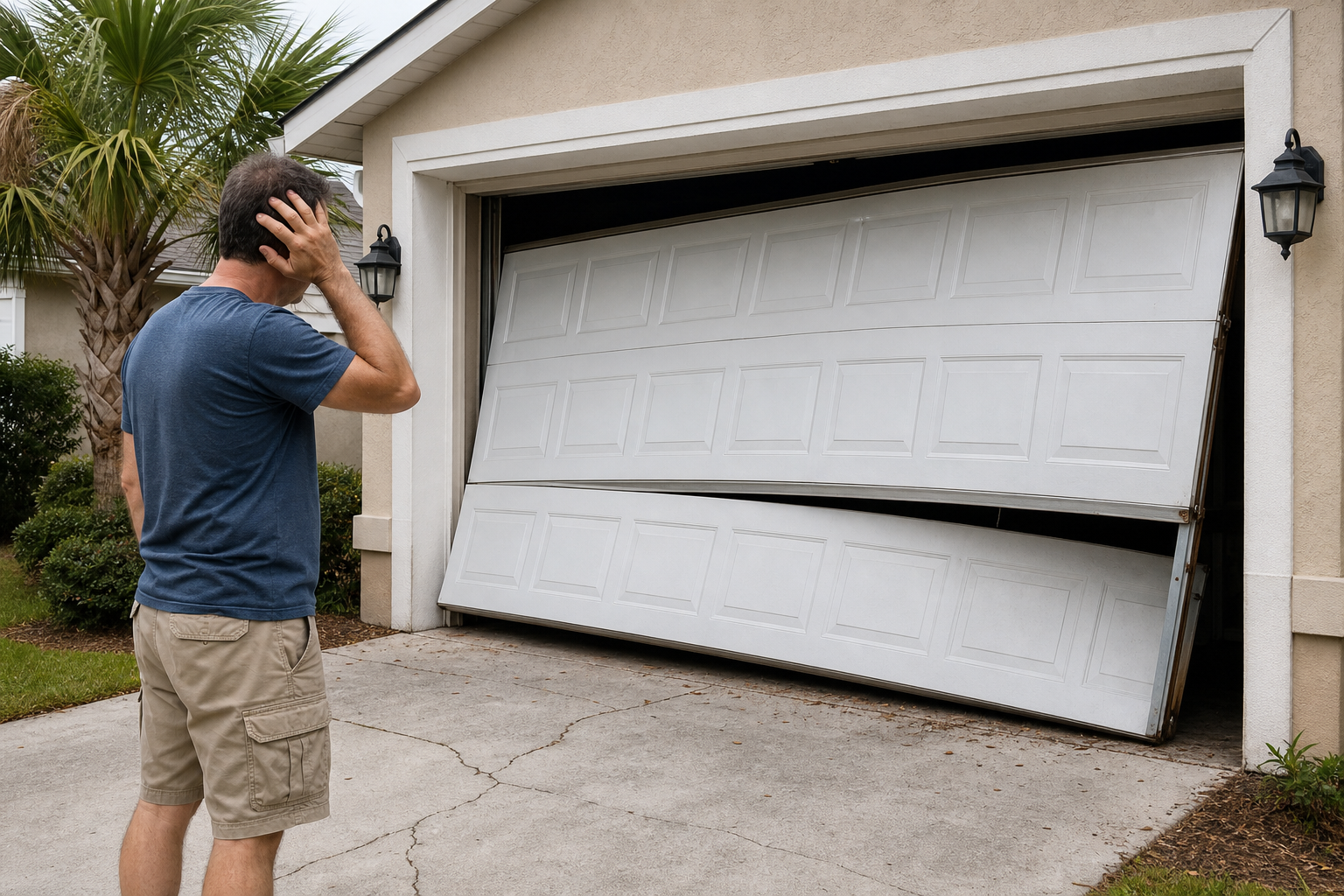
Top Signs You Need Garage Door Service — Don’t Ignore These
The number one thing we hear after a torsion spring snaps is, “It was making a noise for a while, I just thought it was normal.” It’s not normal. For homeowners in Jacksonville, your garage door is a critical part of your daily routine, and ignoring subtle warnings can lead to inconvenient breakdowns or even safety hazards. We’ve seen countless garage door failures over our 18+ years, and most give you a 2–6 week warning window. This post names those signals precisely so you can act before your door fails at 7 am when you’re already late for work.
If you’d rather not spend time diagnosing potential issues, call us at (904) 822-4337 for a free estimate. We offer expert Fast Track Garage Door Repair Jacksonville home service.
Is That Creak Just Old Age, or a Failing Spring?
That persistent creaking, groaning, or grinding sound your garage door makes isn’t just the soundtrack to your day; it’s often a cry for help, especially for the torsion springs. In Jacksonville, with its humid air and occasional temperature swings, these springs work overtime. A new door might make a little noise as it settles, but a continuous, worsening squeak or a loud metallic screech often indicates stress fatigue within the torsion springs. These springs are under immense tension and are the primary component that lifts and lowers your heavy door. When they start to sound strained, it means they’re working harder than they should, and the metal is undergoing significant stress. This isn’t just about annoyance; a failing spring can lead to the door becoming unbalanced, making it difficult and dangerous to operate manually, and significantly increasing the strain on your opener motor. Don’t dismiss it as just a minor annoyance; this is usually the first, and most critical, sign that your garage door needs professional attention before a full failure occurs. We’ve seen springs that looked okay visually but sounded like they were screaming for help, and they typically fail within weeks if not addressed.
Key indicators of spring issues include:
- A loud, sudden bang or snap, often followed by the door refusing to open or closing unevenly.
- A continuous, high-pitched squealing or grinding sound that gets louder as the door moves.
- The door feeling significantly heavier when you try to lift it manually.
- The opener struggling to lift the door, making loud straining noises.
The ‘Close-and-Reverse’ Mystery: It’s Not Always Your Sensors
One of the most frustrating garage door problems is when it starts to close, only to abruptly reverse and go back up. Many homeowners in Jacksonville immediately suspect the safety sensors at the bottom of the tracks. While faulty sensors can cause this, it’s often not the root cause, especially in our local climate. More commonly, this behavior points to an issue with the door’s balance or an opener that’s struggling under too much load. If your torsion springs are weak or breaking, they can’t properly counterbalance the door’s weight. This imbalance forces the opener to work overtime, and its internal safety mechanisms detect the excessive strain or obstruction (the unbalanced door) and trigger a reversal. In Jacksonville, the constant use of garage doors, combined with the humidity that can affect lubrication and metal components, exacerbates these issues. A door that consistently reverses before fully closing is a strong signal that the door is no longer properly balanced, and it’s putting undue stress on your opener. This is a critical warning sign that needs professional diagnosis to prevent further damage to the opener or a potential spring failure.
Consider these points:
- Test your balance: Disconnect the opener and try to lift the door by hand. It should move smoothly and stay open about halfway. If it slams down or shoots up, it’s unbalanced.
- Opener strain: Listen for straining or grinding noises from the opener motor as it tries to close the door.
- Sensor alignment: While less common for consistent reversals, ensure your safety sensors are clean, unobstructed, and aligned.
Rust Patterns: More Than Just an Eyesore
The appearance of rust on your garage door components, particularly on the cables and drums, is a visual indicator that needs careful examination. It’s not always just surface-level oxidation; it can be a sign of active corrosion that weakens critical parts. In Jacksonville, the salty air near the coast and the high humidity inland contribute significantly to metal degradation. When you see rust on the lift cables, which are essential for safely raising and lowering the door, it’s a serious concern. Flaky, deep rust that seems to be eating away at the metal suggests structural integrity is compromised. Similarly, rust on the drums (the spool-like components where the cables wind up) can indicate friction and wear. Active corrosion can lead to cable snaps, which is a dangerous situation as the door can fall rapidly. You should also look for frayed or broken strands within the cables themselves, often exacerbated by the corrosive environment. Don’t just wipe it away; investigate the depth and extent of the rust. If you see significant pitting or flaking, it’s time to call a professional for an inspection and potential replacement of these vital safety components.
Pay attention to:
- Cable condition: Look for fraying, kinks, or snapped strands, especially where rust is present.
- Drum integrity: Check for deep pitting or wear on the winding drums.
- Track rust: While less critical, rust on the vertical or horizontal tracks can indicate moisture issues and affect smooth operation.
The ‘Slow-on-Open, Fast-on-Close’ Asymmetry
Have you noticed your garage door moves at different speeds depending on whether it’s opening or closing? This subtle asymmetry is a classic precursor to a torsion spring failure. In Jacksonville, where garage doors are used daily, this difference in performance is often overlooked. Ideally, a properly balanced garage door should open and close at a relatively consistent, controlled pace, especially when operated manually. When the door opens slowly and seems to struggle, but then closes quickly and with a thud, it’s a strong indicator that the torsion springs are losing their tension. The springs are designed to provide a counterbalance throughout the entire range of motion. As they weaken or fatigue, they can no longer effectively assist in lifting the door, leading to the opener doing most of the work and the door moving slowly on the upward journey. Conversely, as the door begins its descent, the weakened springs offer less resistance, allowing gravity to pull it down faster than it should. This imbalance is a clear warning sign that the springs are compromised and are on the verge of breaking, which can happen suddenly and without further warning.
This behavior suggests:
- Spring fatigue: The torsion springs are losing their ability to store and release energy effectively.
- Opener strain: The opener motor is overworked trying to compensate for the lack of spring assistance.
- Potential for sudden failure: A spring in this state is highly likely to snap.
The Bottom Seal Gap: It’s About More Than Just Drafts
A gap between the bottom seal of your garage door and the floor when it’s fully closed might seem like a minor inconvenience, letting in a bit of weather or pests. However, in Jacksonville, this gap often tells a much larger story about the alignment of your entire garage door system, particularly the tracks. If the door isn’t sitting flush and sealing properly at the bottom, it’s frequently a sign that the vertical tracks are not perfectly plumb (vertical) or that the horizontal tracks are not aligned correctly. This misalignment can be caused by a variety of factors, including settling of the home’s foundation, impact from a vehicle, or even improper installation. When the tracks are out of alignment, it creates friction and stress on the rollers and the door itself, hindering its ability to close evenly. It’s not just about keeping out the rain or the occasional stray critter; an improperly sealed door compromises security and can lead to premature wear on components like rollers and the opener. This is a concrete sign that the physical structure of your door’s movement is compromised and needs adjustment to ensure smooth operation and a proper seal.
This gap indicates:
- Track misalignment: The vertical and horizontal tracks may not be straight or parallel.
- Roller wear: The rollers might be binding or damaged due to the misalignment.
- Structural stress: The entire door system is under undue pressure.
When to Call a Pro
While some minor adjustments can sometimes be made by a homeowner, the signs we’ve discussed—especially those involving springs, cables, or significant track issues—are best left to experienced professionals. Attempting to repair these critical components yourself can be dangerous due to the high tension involved and can lead to further damage or injury. For homeowners in Jacksonville, relying on the expertise of a seasoned technician ensures these issues are diagnosed and resolved correctly the first time, preventing future headaches and costly repairs. We’ve been specializing in garage doors for 9 years, and we’ve seen it all.
Related Services in Jacksonville:
- Garage Door Repair in Round Rock (Placeholder – Actual link should point to a Jacksonville-specific repair page if available, otherwise this is a sample)
- Garage Door Installation in Round Rock (Placeholder – Actual link should point to a Jacksonville-specific installation page if available, otherwise this is a sample)
- Garage Door Opener in Round Rock (Placeholder – Actual link should point to a Jacksonville-specific opener page if available, otherwise this is a sample)
The Bottom Line
Your garage door speaks to you through its sounds, movements, and even its appearance. Ignoring these signs is like ignoring a check engine light in your car – it rarely ends well. From the subtle creak of a stressed spring to the frustrating reverse of a closing door, these indicators are your door’s way of telling you it needs professional attention. Acting on these early warnings can save you time, money, and a lot of hassle. We’ve seen countless garage doors in Jacksonville that could have been fixed with a simple adjustment or part replacement, but were left until they failed completely, leading to more complex and expensive repairs. Don’t wait for a complete breakdown; listen to your garage door.
If you’re in Jacksonville and need help, Fast Track Garage Door Repair Jacksonville offers free estimates — call (904) 822-4337.
Frequently Asked Questions
The most common sign is unusual noises, such as grinding, squealing, or loud creaking, especially if they’ve worsened over time. These sounds often point to issues with torsion springs, rollers, or the opener motor that need immediate attention.
No, you should not ignore a garage door that closes halfway and reverses. This behavior typically indicates an issue with the door’s balance, a struggling opener motor, or a problem with the torsion springs. Continuing to operate it can lead to further damage to the opener or a dangerous spring failure. Call (904) 822-4337 for an exact diagnosis.
Signs of failing garage door springs include a loud bang or snap, the door feeling significantly heavier when trying to lift manually, the door closing too quickly, or the opener straining to lift the door. In Jacksonville, we often see these issues exacerbated by humidity affecting the springs.
It’s usually cheaper to repair a garage door than to replace it, especially for common issues like broken springs, worn rollers, or opener problems. Replacement is typically considered when the door is significantly damaged, rusted, or outdated. For an accurate assessment for your Jacksonville home, call (904) 822-4337 for a free estimate.
Reviewed by Franklin Ramirez, Owner & Lead Technician at Fast Track Garage Door Repair Jacksonville, serving Jacksonville since 2008.
Need Garage Door Help?
Call Fast Track Garage Door Repair Jacksonville — licensed & insured, here with fast after-hours help in Jacksonville.
(904) 822-4337